



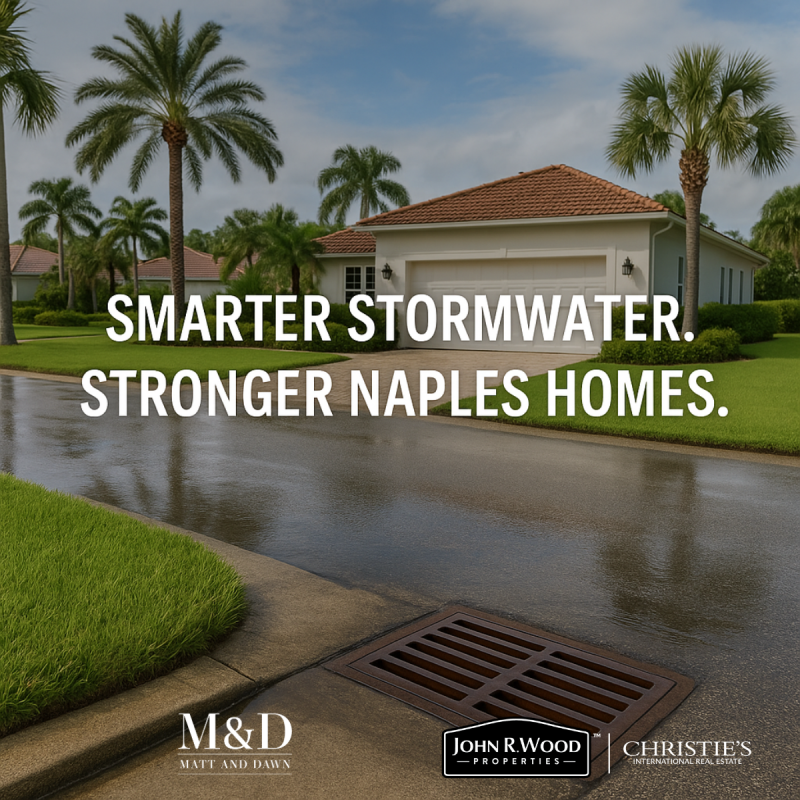
The City of Naples just took an important step to upgrade its stormwater system – and while that doesn’t sound as fun as beaches and golf, it really matters for homeowners and buyers.
What Did the City Just Approve?
In early December 2025, Naples City Council approved a multi-year increase in the stormwater utility fee to fund a series of stormwater upgrades across the city. The plan calls for stormwater rates to rise about 25% per year for four years, creating a long-term funding stream for critical drainage and water-quality projects.
According to the City’s own Business Impact Estimate, the goal is straightforward: raise the money needed to replace and improve aging stormwater infrastructure, increase capacity, and reduce the risk of flooding—without dramatic one-time spikes in bills. For a typical single-family home (one “average residential unit”), the monthly and annual impact is described as “slight”, with larger multifamily and commercial properties paying more based on the number of billed units.
Why Stormwater Matters So Much in Naples
Naples isn’t just sunny; it’s wet. The city averages about 56 inches of rain a year, with much of that falling in just four to five summer months. When those heavy downpours hit, all that water has to go somewhere—quickly and cleanly.
That’s where the Stormwater Master Plan and related lake restoration projects come in. The city’s program is designed to:
-
Protect people and property from flooding
-
Improve water quality before runoff reaches Naples Bay, Moorings Bay, the Gordon River, and the Gulf
-
Restore and maintain stormwater lakes, such as North Lake and South Lake, which store stormwater, reduce peak flows, and help move water safely out to the Gulf
-
Support a healthier aquatic environment by removing nutrient-rich sediments, improving oxygen levels, and reducing odors in lakes and ponds
Some of these projects are already under construction, including dredging and deepening key stormwater lakes to increase storage capacity and improve water quality.
What This Means for Homeowners and Buyers
From a real estate perspective, this stormwater upgrade program has several potential benefits:
1. Less Flood Risk = More Peace of Mind
A stronger stormwater system means less standing water on streets and yards, fewer flooded driveways, and better protection for homes during heavy summer storms or tropical events. Over time, that kind of resiliency supports both livability and property values, especially in a coastal city that buyers increasingly scrutinize for flood risk.
2. Better Water Quality and Neighborhood Appeal
Stormwater lakes and outfalls don’t just move water; they shape how our neighborhoods look, smell, and function. Projects that dredge lakes, remove organic muck, and improve flow can:
-
Reduce algae blooms and murky water
-
Improve odors around lakes
-
Support healthier fish and wildlife
For homes backing onto lakes or canals, that can directly affect curb appeal, buyer perception, and long-term value.
3. Long-Term Infrastructure Investment (Not a Quick Fix)
The City’s plan is structured around a 20-year horizon of critical stormwater needs, with rate increases phased in gradually to avoid the “sticker shock” of a big one-time jump.
For owners and buyers, that sends a useful signal: Naples is investing ahead of the curve in drainage, rather than waiting for a crisis and then scrambling to fund repairs—something many coastal communities are now struggling with.
4. Modest Monthly Cost, Community-Wide Benefit
While nobody loves a higher utility bill, the City’s own analysis characterizes the increase for typical single-family homes as minor on a monthly basis, especially relative to the potential cost of flood damage or declining water quality.
For most residents, this is essentially a small, predictable line item that helps protect a very large asset: their home.
Takeaways for Buyers and Sellers
If you’re buying in Naples:
-
Ask how stormwater is handled in the neighborhood—are there lakes, swales, or outfalls nearby that are part of the City’s program?
-
Recognize that a slightly higher stormwater fee is helping reduce long-term risk, not just adding cost.
-
In your due diligence, consider both insurance and infrastructure—a city actively investing in drainage is a positive sign.
If you’re selling:
-
It’s reasonable to position these upgrades as a value-add for the community—evidence that the City is serious about managing stormwater, flooding, and water quality.
-
For properties near project areas (lakes, outfalls, or major drainage improvements), improved water quality and aesthetics can be a strong talking point with prospective buyers.
Bottom Line
Naples’ new stormwater rate plan isn’t just a utility tweak—it’s a long-term investment in flood protection, cleaner water, and neighborhood quality of life. For real estate buyers and sellers, that translates into a more resilient city, better-performing neighborhoods, and stronger support for property values over time.